

The Trade#
Instrument: MNQ (Micro E-mini Nasdaq-100)
Direction: Short
Session: around 10:00 AM ET
Model: ICT Silver Bullet (10 to 11 AM window), sell side
Result: ✅ WIN, about +210 points to target, roughly 1:14
Draw on Liquidity#
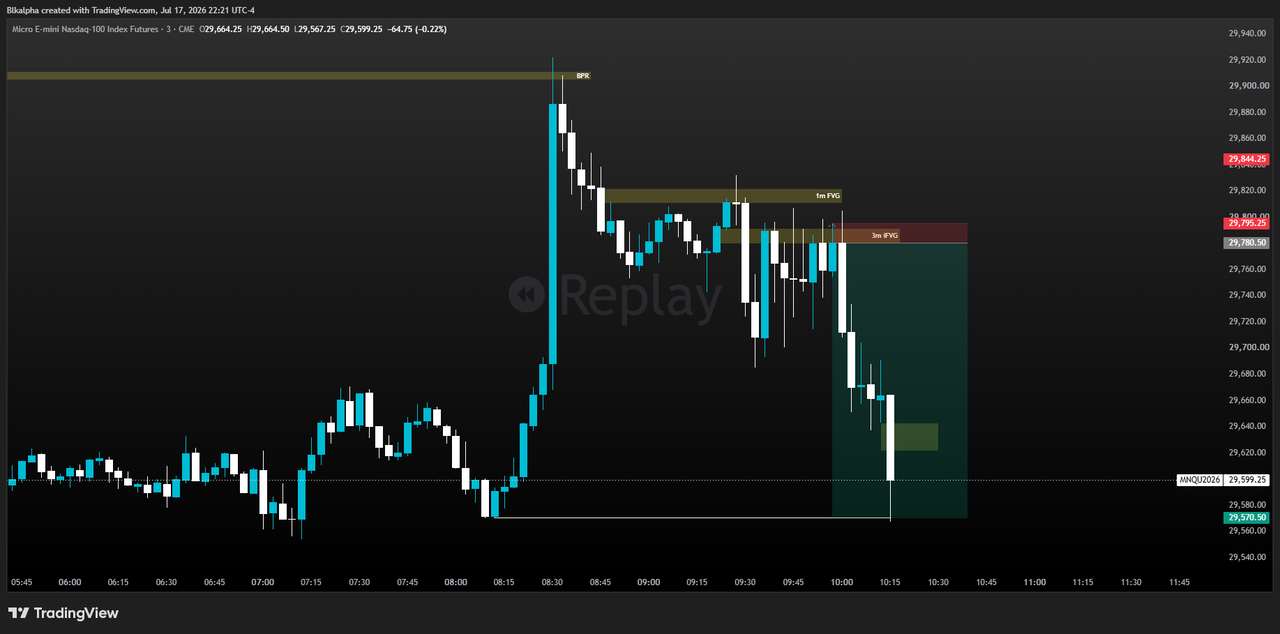
The 08:30 spike ran price up to about 29,920 and left a BPR (balanced price range) sitting at the highs. That was the premium array I wanted price to trade back into before selling. Below the market, the obvious downside draw was the sellside liquidity resting under the range at the session lows around 29,570. So the plan was simple. Let price rally back into the imbalance up top, then look for the short down into the lows.
The Setup#
- Premium array: BPR at the highs (around 29,900 to 29,920), with a stacked 1m FVG (about 29,800 to 29,820) and 3m iFVG (about 29,780 to 29,800) just under it
- Entry: short off the 3m inverse FVG around 29,780 as price retraced up into the imbalance
- Stop: 29,795.25, tucked just above the iFVG, about 15 points of risk
- Target: sellside liquidity at the range lows, 29,570.50
- R:R: about 15 points risk for about 210 points, roughly 1:14
How It Played Out#
Price pushed back up into the 1m FVG and 3m iFVG, the imbalance held, and the market rejected right where I wanted it. From there it was one clean leg down. Price broke the range and delivered straight into the sellside at 29,570, filling the target. Because the stop was tucked right above the iFVG, the risk stayed tiny while a normal sized move paid out large.
Key Lesson#
Tightening the stop to the imbalance is where the trade was made. Same 210 point target, but risking 15 points instead of 60 turns a decent short into a great one. That only works when you trust the iFVG to hold, so the entry has to be precise. Wait for price to trade back into the array, then let the imbalance do the work.
Educational purposes only. This is my personal analysis, not financial advice. Always do your own research and never risk more than you can afford to lose.